Our Location
304 North Cardinal St.
Dorchester Center, MA 02124

304 North Cardinal St.
Dorchester Center, MA 02124
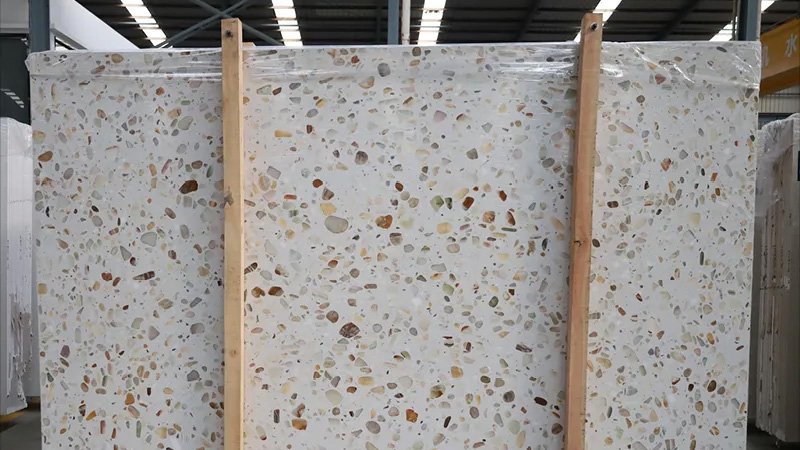
If you have ever walked through an airport terminal, a subway station, or a historic government building and noticed a smooth, stone-like floor embedded with colorful chips, you have likely seen an inorganic terrazzo slab. But what exactly is it, and how does it differ from the epoxy terrazzo systems used in many modern interiors? This guide explains the fundamentals in plain language.
Inorganic terrazzo is a large decorative panel made by embedding natural aggregates—such as marble chips, quartz, recycled glass, or shell—into an inorganic cementitious binder, typically Portland cement. The mixture is pressed or poured, cured, ground, and polished to create a dense, durable surface. According to the National Terrazzo & Mosaic Association (NTMA), cement-based terrazzo represents the original terrazzo system, dating back to 15th-century Venice, where marble workers reused stone fragments to create inexpensive terrace flooring.
Unlike organic epoxy terrazzo, which relies on synthetic resin, the inorganic terrazzo contains no polymer binders. This gives it distinct advantages in fire resistance, breathability, and weathering performance. It can be manufactured as a precast panel in a factory or poured in place on site.
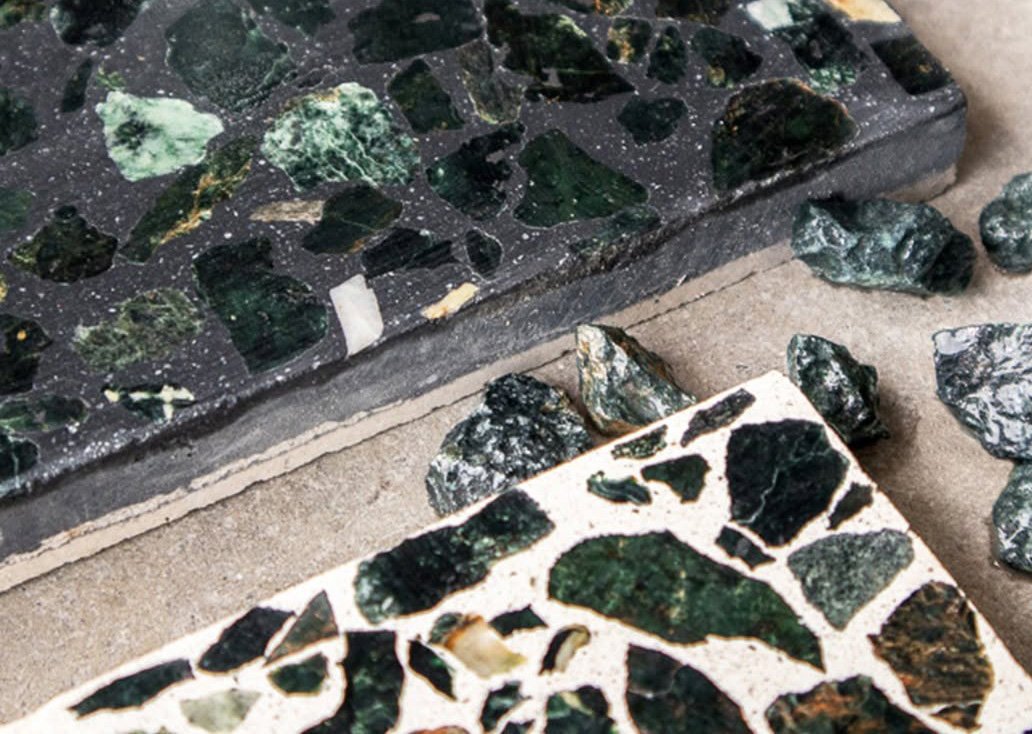
The binder in a traditional inorganic terrazzo slab is Portland cement, while the aggregates are usually natural marble chips, though quartz, granite, recycled porcelain, and metal fragments can also be used. The NTMA classifies cement terrazzo into several installation systems:
For precast inorganic terrazzo production, the cement-based mixture is poured into large molds, compacted under pressure, steam-cured, and then cut into panels typically 1.2 to 2.0 cm thick for shipping and installation.
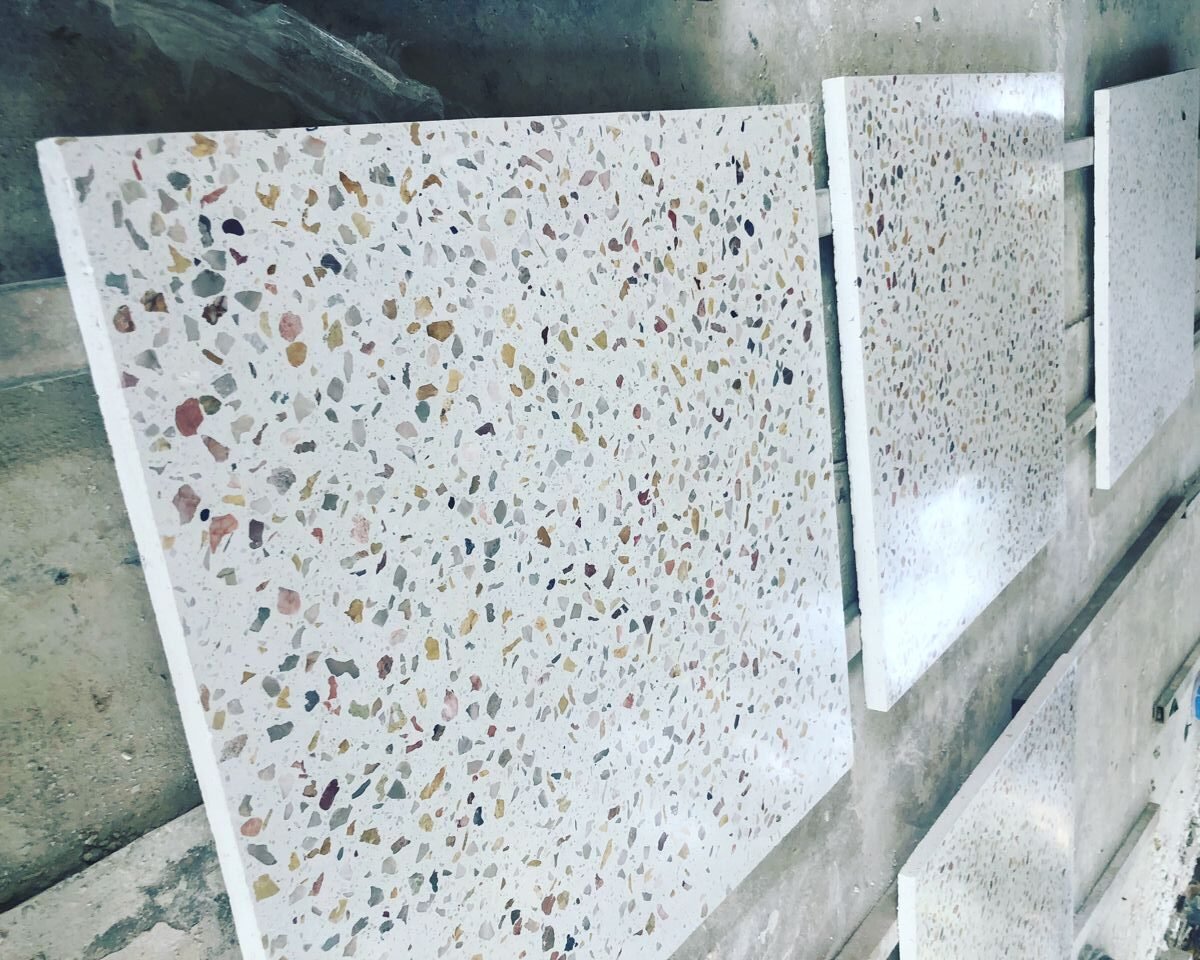
The physical properties of inorganic terrazzo slab have been proven across decades of commercial use. Industry testing data indicates the following typical benchmarks for high-quality products:
These figures demonstrate that inorganic terrazzo delivers balanced performance in hardness, durability, and safety, making it especially suitable for public buildings with strict fire codes.
Understanding how the inorganic terrazzo compares with epoxy terrazzo clarifies why architects choose one over the other:
| Property | Inorganic Terrazzo Slab | Epoxy Terrazzo |
|---|---|---|
| Binder | Portland cement (inorganic) | Epoxy resin (organic) |
| Thickness | Thicker (1/2-inch topping, up to 3 inches with underbed) | Thinner (typically 3/8 inch) |
| Weight | Heavier (sand-cushion approx. 25–30 lbs/sf) | Lighter (approx. 3–4 lbs/sf) |
| Compressive strength | Approx. 4,000 psi | Approx. 13,260 psi |
| Fire performance | Class A1 non-combustible | Combustible, emits smoke |
| Permeability | Porous and breathable | Impermeable vapor barrier |
| Outdoor suitability | Excellent, UV-stable | Not recommended, prone to yellowing |
| Color range | Classic, muted earth tones | Vibrant, virtually unlimited |
| Cure time | Longer, days to weeks | Short, grindable within 24 hours |
Epoxy terrazzo excels in strength, color vibrancy, and design flexibility, while the inorganic terrazzo leads in fire safety, breathability, outdoor durability, and environmental compatibility.
Given these characteristics, the inorganic terrazzo is the preferred choice for several specific scenarios:
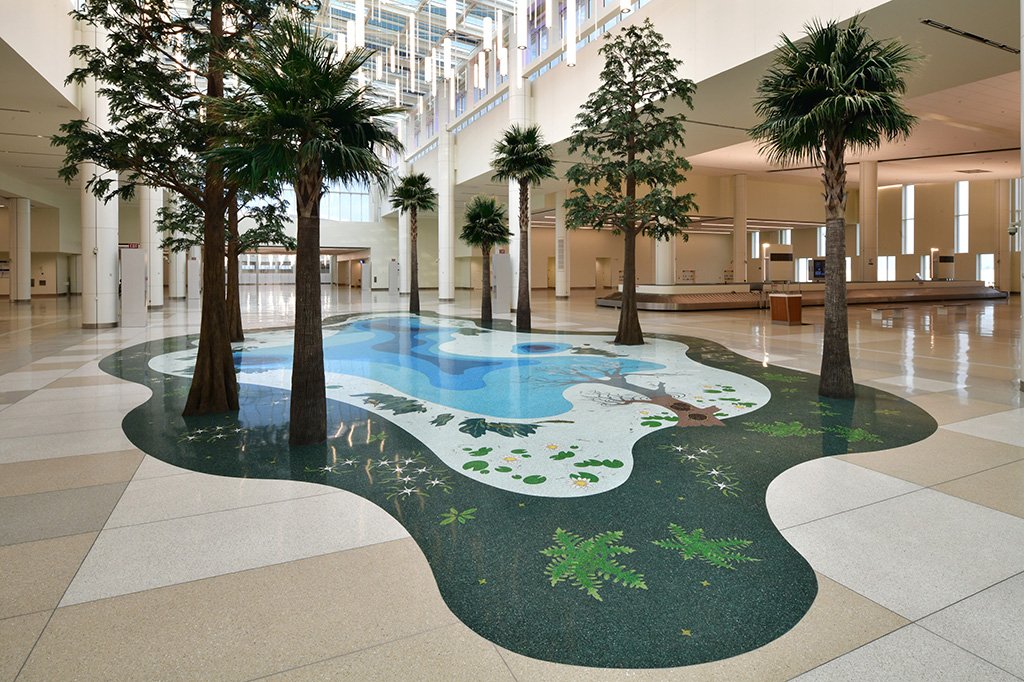
For poured-in-place applications, the NTMA specifies that subfloors must meet a flatness tolerance of 1/4 inch over a 10-foot span. Because cement systems undergo hydration shrinkage, divider strips are typically required every 3 to 5 feet to control cracking.
Precast inorganic terrazzo slab installation is more straightforward, similar to setting natural stone or ceramic tile with cement mortar or specialty adhesive. The panels can be cut and drilled to accommodate various layouts.
Daily maintenance is simple. Although the cement matrix is naturally porous, modern inorganic terrazzo products receive factory-applied stain-resistant sealers that repel coffee, wine, and oil. Routine cleaning with a damp mop or neutral pH cleaner is usually sufficient, and there is no concern about chemical damage from harsh cleaners.
The inorganic terrazzo offers notable green-building advantages. It contains zero volatile organic compounds (VOCs), contributing to healthier indoor air quality. The aggregate content can incorporate high percentages of recycled marble, porcelain, or glass, reducing demand for virgin raw materials. Finally, with a service life of 40 to 75 years under normal conditions, it minimizes the construction waste associated with frequent floor replacement.
Inorganic terrazzo slab is a large decorative panel that combines natural aggregates with a cement binder, then grinds and polishes the surface to a durable finish. It carries forward the classic aesthetic of terrazzo developed over centuries while delivering the non-combustibility, breathability, weather resistance, and environmental benefits required by modern architecture. Although it may not match the color brilliance or extreme strength of epoxy systems, the inorganic terrazzo slab remains one of the most reliable choices for exterior applications, fire-safe designs, historic restorations, and sustainable building projects.
Source stock inorganic terrazzo large‑size slabs you like, or to customize exclusive inorganic terrazzo products. Turn your creative ideas into reality!