Our Location
304 North Cardinal St.
Dorchester Center, MA 02124

304 North Cardinal St.
Dorchester Center, MA 02124
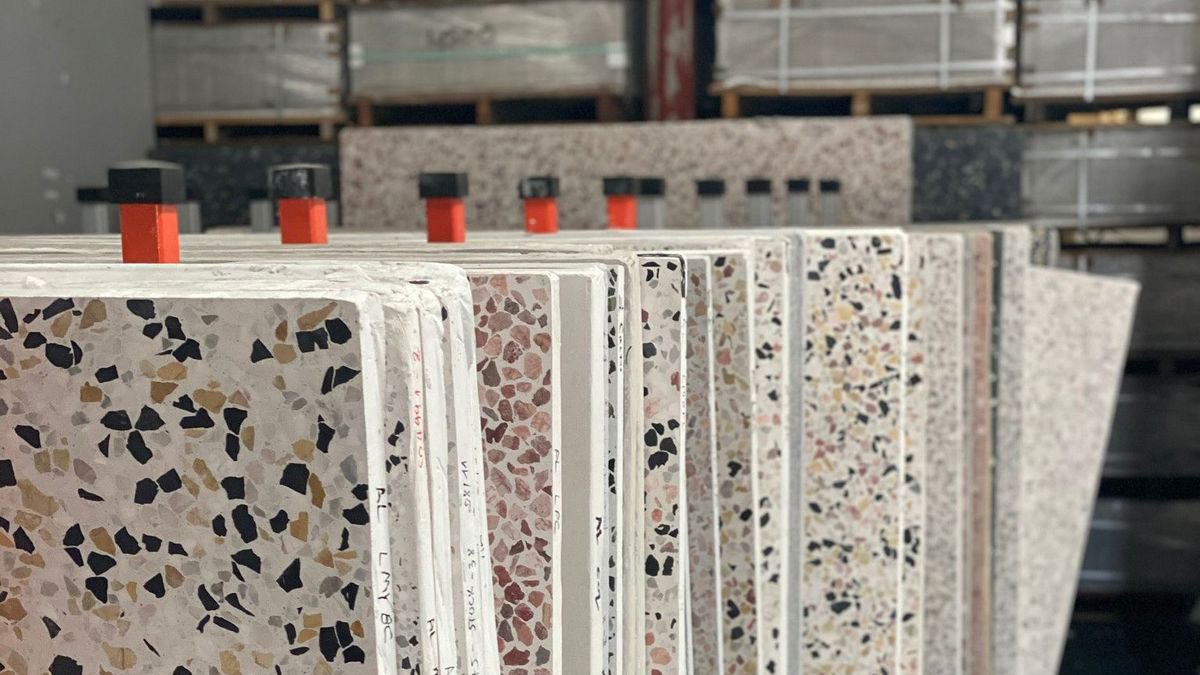
When architects specify flooring for airports, hospitals, or upscale commercial projects, the epoxy terrazzo slab has become one of the most trusted solutions. But what exactly is it, and why has it replaced traditional cement terrazzo in so many modern buildings? This guide explains the fundamentals in plain language.
An epoxy terrazzo slab is a composite surface material made by embedding decorative aggregates—such as marble chips, quartz, recycled glass, metal, or shell—into a pigmented epoxy resin matrix. It can be manufactured as a large precast panel in a factory or poured in place on site and then ground to a seamless finish. According to the National Terrazzo & Mosaic Association (NTMA), epoxy-based systems now account for roughly 90 percent of terrazzo installations in commercial buildings, making them the current industry standard.
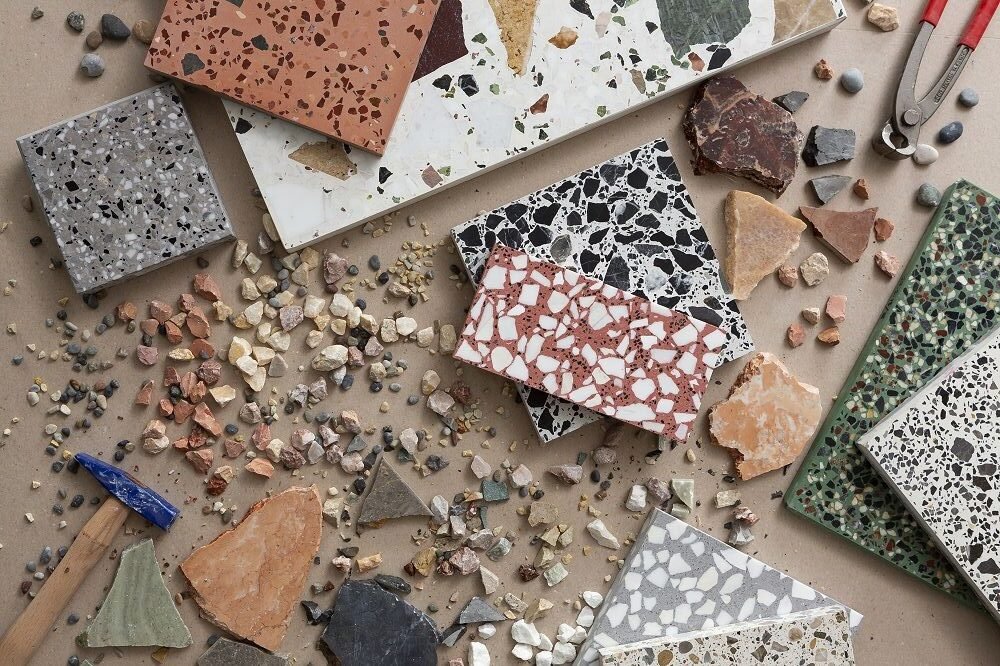
Unlike traditional cement terrazzo, which relies on Portland cement as its binder, an epoxy terrazzo uses a two-component epoxy resin. This creates a much thinner and lighter system—typically only 3/8 inch to 1/4 inch thick—compared with cement systems that often require a total thickness of 2.5 inches or more including their underbed.
The production of an epoxy terrazzo slab follows a precise sequence. First, aggregates are selected and graded to meet NTMA standards. They are then mixed with a pigmented, two-part epoxy resin. For precast slabs, the mixture is poured into molds and vibrated to remove trapped air. For poured-in-place floors, skilled installers trowel the mixture onto a primed concrete substrate.
Curing is remarkably fast. Under the right ambient conditions, an epoxy terrazzo slab can cure overnight and be ready for grinding the next day. The surface then undergoes coarse grinding, grout application to fill any voids, fine grinding, and sealing to achieve a dense, non-porous finish.
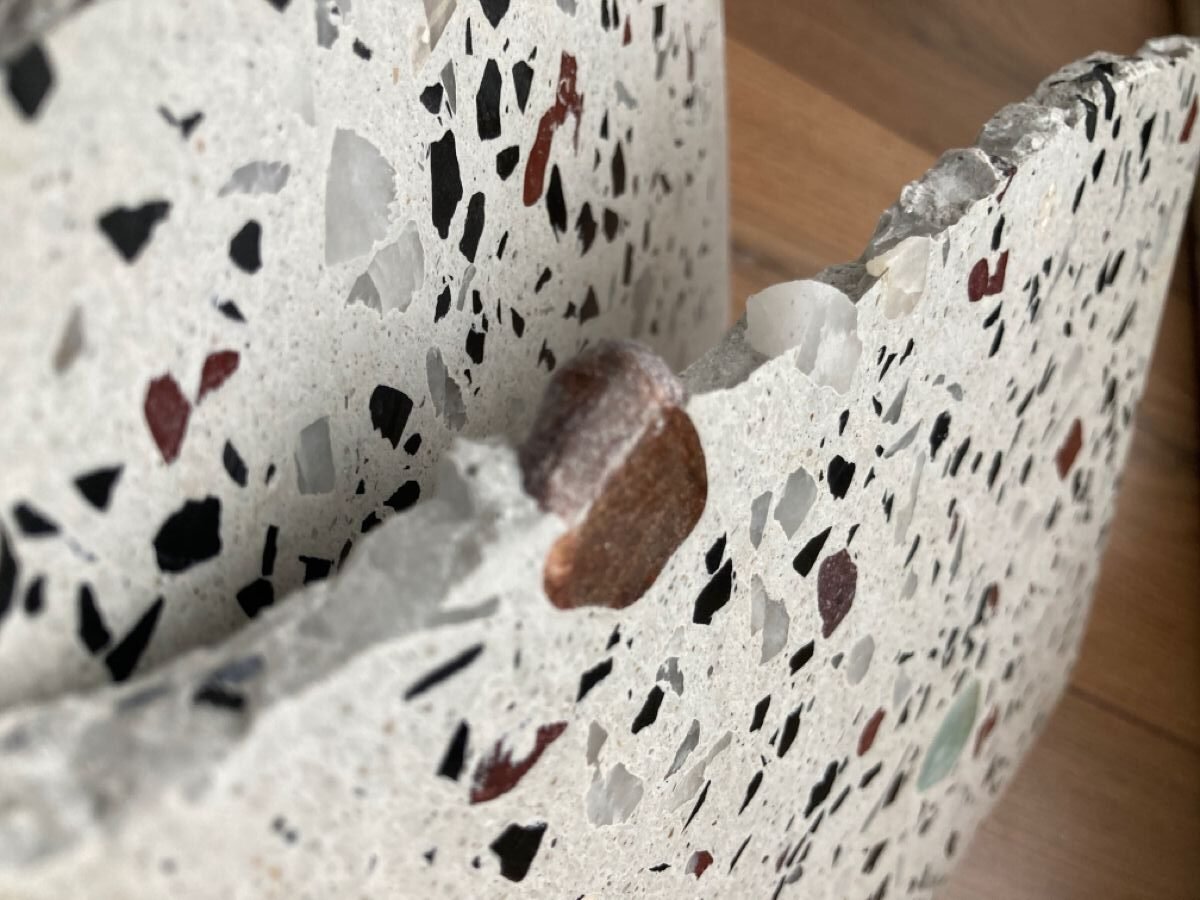
Understanding the differences explains why the epoxy terrazzo slab dominates contemporary specifications.
Strength and Durability: Technical data shows that an epoxy terrazzo slab delivers compressive strength of approximately 13,260 psi, tensile strength of 9,580 psi, and flexural strength of 4,100 psi. Cement terrazzo, by contrast, averages only about 4,000 psi in compression and 400–600 psi in both tensile and flexural strength. This superior performance makes epoxy far more resistant to cracking under heavy traffic or structural movement.
Weight: At roughly 3 to 4 pounds per square foot, the epoxy terrazzo floor is significantly lighter than cement systems, which can weigh 25 to 30 pounds per square foot for sand-cushion installations. This reduced weight makes epoxy practical for multi-story buildings and elevator applications.
Design Flexibility: The epoxy resin matrix can be tinted to match virtually any color, including vibrant brand-specific hues. An epoxy terrazzo slab also bonds well with specialty aggregates such as mother-of-pearl, mirror, and plastic chips that cement binders struggle to hold. Divider strips can be spaced 20 to 30 feet apart, enabling larger panel sizes and complex geometric patterns.
Stain and Moisture Resistance: Because epoxy is impervious, the epoxy terrazzo resists moisture penetration, bacterial growth, and staining. Cement terrazzo remains porous even after sealing, making it more vulnerable in spill-prone environments.
Epoxy terrazzo is ideal for indoor commercial settings such as airport terminals, hospital corridors, school lobbies, retail stores, and corporate offices. Precast slabs extend the material to wall cladding, stair treads, countertops, and reception desks.
However, epoxy is generally not recommended for outdoor use because UV radiation can cause discoloration over time. Additionally, substrates with relative humidity above 75 percent require a moisture mitigation system before installation.
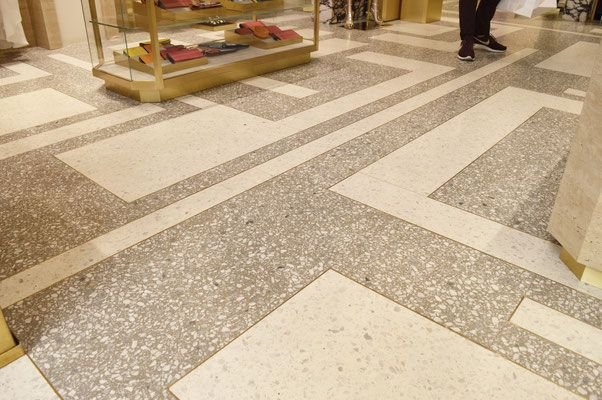
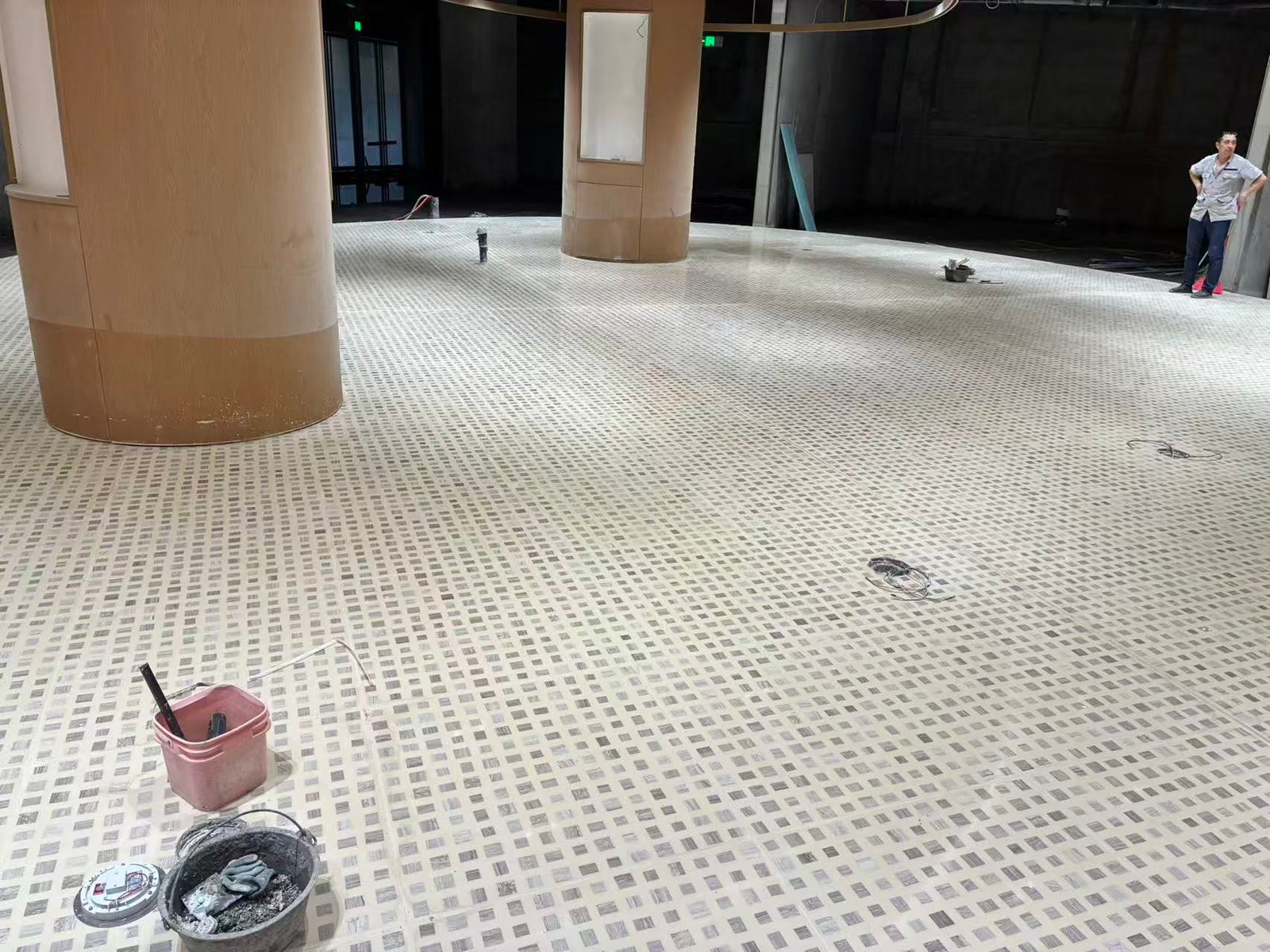
Proper substrate preparation is critical. The NTMA specifies that subfloors must meet a flatness tolerance of 1/4 inch over a 10-foot span. Cracks must be pre-filled with a flexible reinforcing membrane, often backed with fiberglass scrim, to prevent telegraphing through the finished surface.
Once installed, maintenance is minimal. The non-porous surface does not require periodic sealing. Routine cleaning with a damp mop or neutral pH cleaner is usually sufficient. With proper care, an epoxy terrazzo floor can last 40 years or more, offering one of the lowest lifecycle costs of any flooring system.
Modern epoxy terrazzo slabs support green building goals. Many manufacturers use zero-VOC epoxy formulations, and the material can incorporate high percentages of recycled aggregate. Because the floor lasts for decades, it reduces the frequency of replacement and the construction waste sent to landfills.
An epoxy terrazzo slab is a thin, lightweight, and exceptionally durable composite material that blends decorative aggregates with a pigmented epoxy binder. It offers superior strength, unlimited design possibilities, and minimal maintenance compared with traditional cement terrazzo. Whether serving as flooring in a busy transit hub or as a feature wall in a corporate headquarters, the epoxy terrazzo slab remains one of the most versatile and long-lasting choices in contemporary architecture.
Source stock epoxy terrazzo large‑size slabs you like, or to customize exclusive epoxy terrazzo products. Turn your creative ideas into reality!