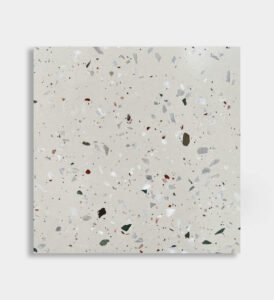
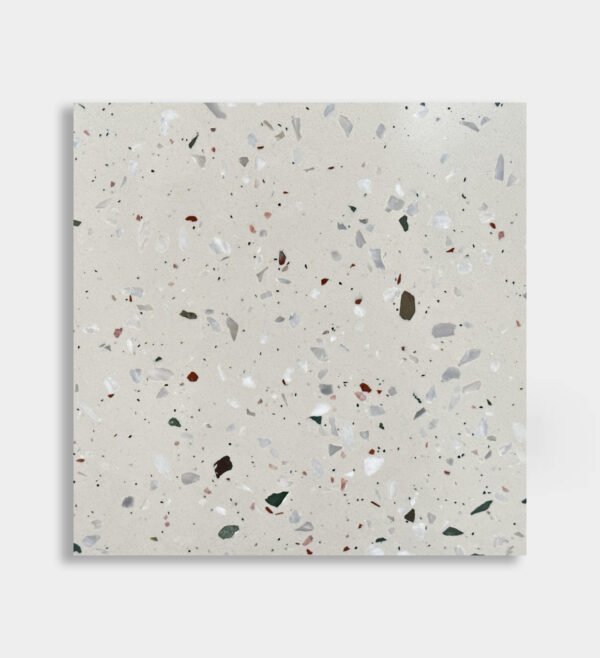
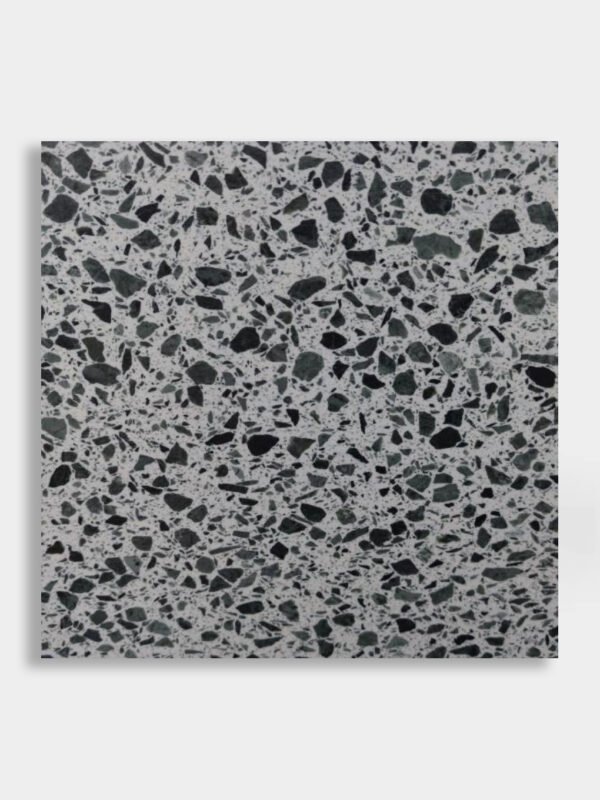
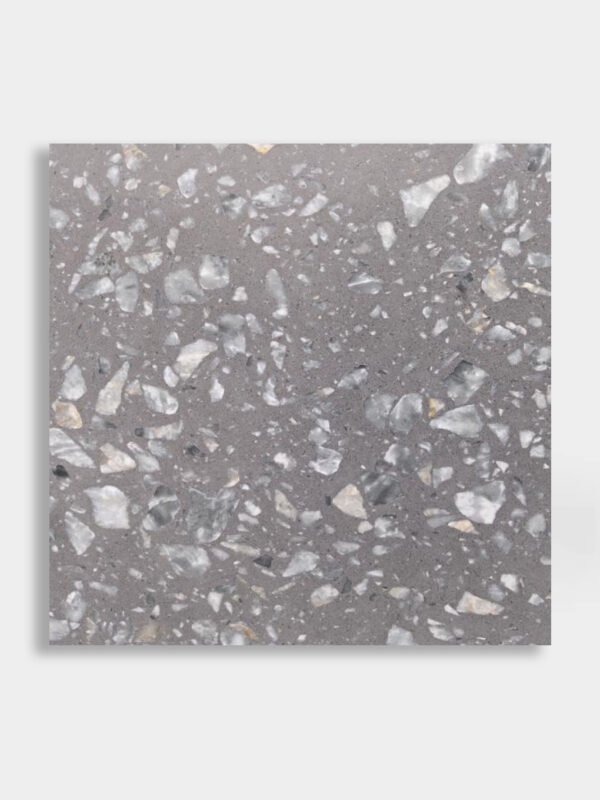
This is a cement-based inorganic terrazzo with a clean white base, embedded with two sizes of mineral aggregate. The main chips are white and black, measuring 0.5 to 1 cm, interspersed in substantial numbers. Scattered sparingly among them are tiny red mineral grains, just 0.1 to 0.3 cm across, appearing like sparse specks across the surface.
At 0.5 to 1 cm, these are small-to-medium chips. The white ones sit close to the base tone, reading as subtle shifts within the same color family; the black ones are more prominent, forming a clear dotted texture against the white ground. The 0.1 to 0.3 cm red grains are smaller than rice grains, nearly invisible at a glance. Yet it is these minute red dots that add a touch of warmth to the quiet surface, like flecks of cinnabar fallen on white paper.
As an inorganic terrazzo bound by Portland cement, it is vacuum-cast, then cured and ground to finish. Once set, the cement structure is dense and heavy, with hardness and compressive strength exceeding those of resin-based organic terrazzo. Daily foot traffic and moving furniture leave no obvious marks. However, cement naturally has capillary pores, so the surface must be sealed to prevent liquid penetration. Crystallization treatment is required after installation, followed by periodic waxing to maintain luster and stain resistance. Daily cleaning requires only a damp mop or neutral cleaner.
The palette of a white base with black and white chips and fine red accents leans clean and elegant; the occasional red speck keeps the space from feeling too cold. It suits living room, dining room, and bedroom floors, as well as kitchen countertops and bathroom walls. In commercial spaces such as galleries, showrooms, casual restaurants, and studios, it creates an atmosphere that is tidy and rich in detail. Large slabs can be cut to site dimensions, minimizing joints, and are ready for use after proper maintenance.
In short, this is an inorganic terrazzo with a white cement base, black and white mineral chips as the main aggregate, and fine red grains as accents. The tone is clean, the material is solid, and it suits spaces that seek simple texture with a hint of color movement—provided that ongoing maintenance is carried out to preserve the finish.



Reviews
There are no reviews yet.